This second day we met was probably the most creative and productive of my meetings with Abelha Supersonica. The result is a solid piece of improvised drum and bass, which I split into five tracks afterwards.
Thomas Leisner
About Beauty and Bright IdeasArchive for the ‘Discoveries’ Category
In wintertime it’s good to remember the last summer sometimes. I specifically remember my sessions with Abelha Supersonica, a vocalectro live act from Berlin. With just her voice and a few little boxes she creates a superbly flowing performance.
Already ten years ago my brother Markus finished a book that has been available only electronically since. It now has come to a real life as a printed book, and you can get the printed as well as the electronic version right here.
“Das Lied der Krähe” (Song of the Crow) is a book about the great questions of life presented as a dialogue between a young woman and an old man. Markus had finished it in 2003 as a hand writing which I then typed and designed. Since then it was available in electronic form, but has been forgotten about, and I only found it when recently I cleared my computer’s hard drives.
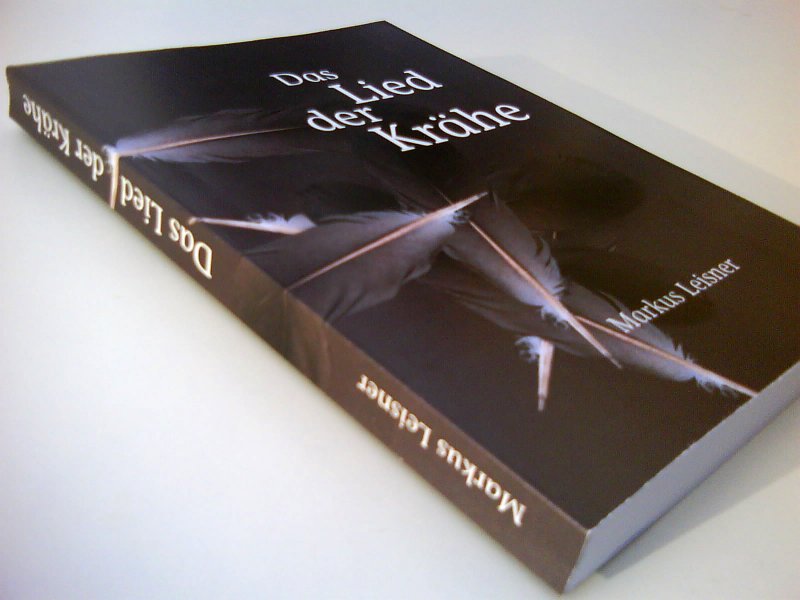
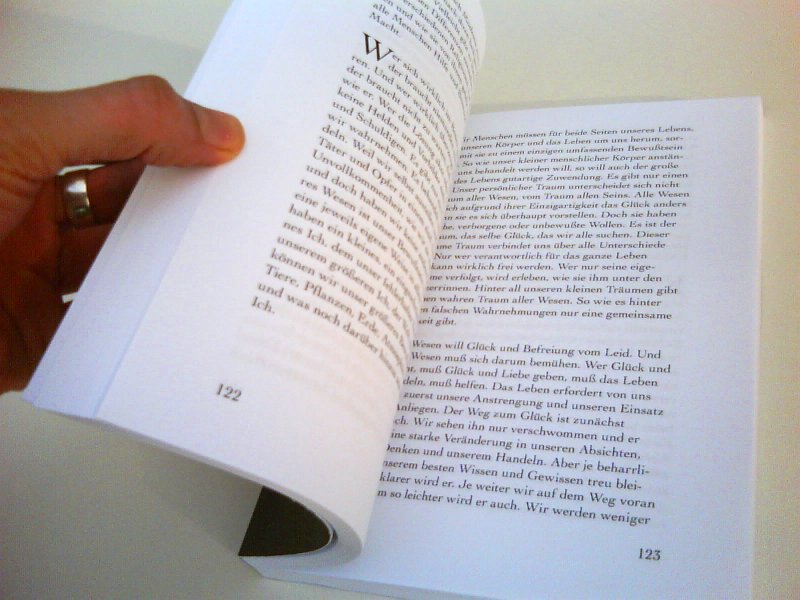
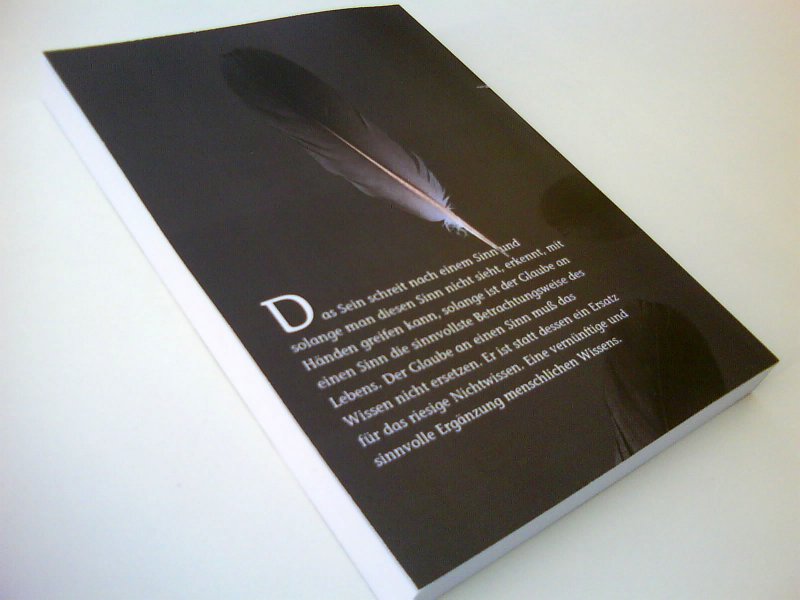
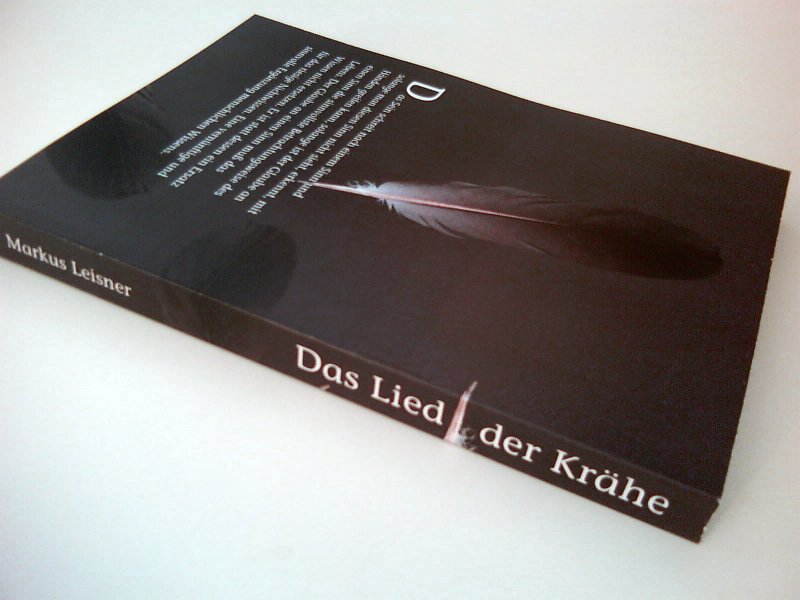
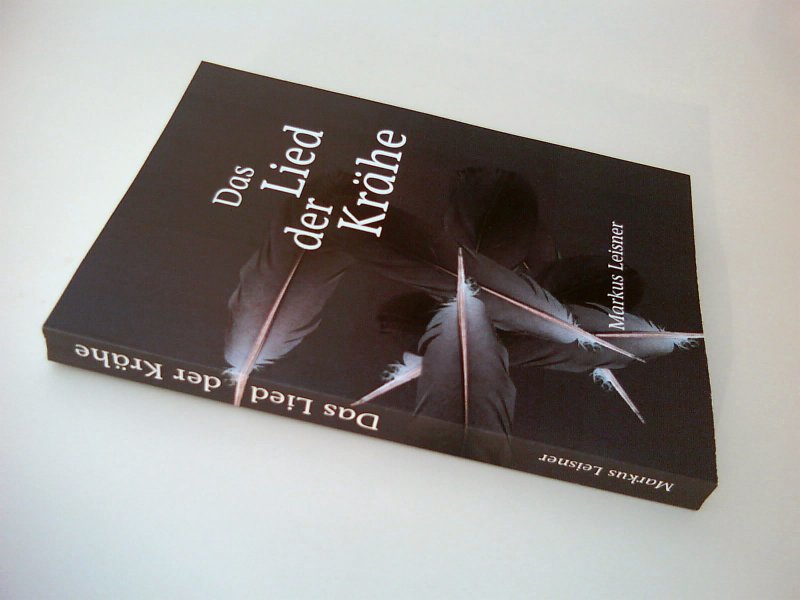
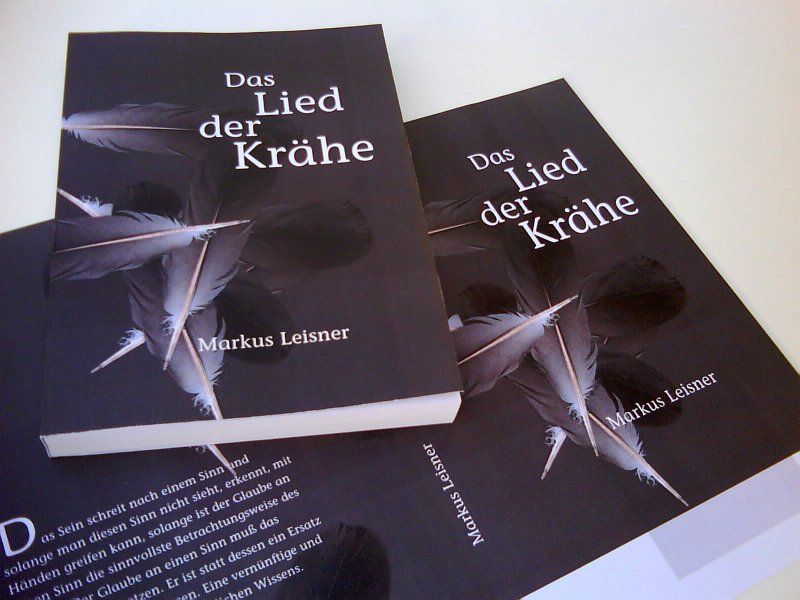
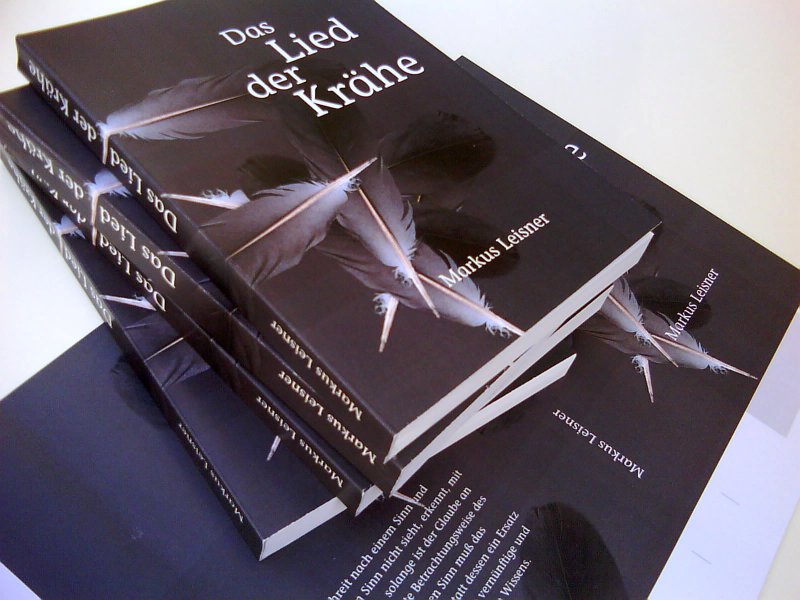
As it would be a pity to really forget about that work, and as the development of printing technology made printing a book affordable, I decided to make it available as a printed book on my website now, ten years after it’s first release. If you want to buy it please use the form below to get in touch with with me. It’s 15 Euros plus 2 Euros for shipping. It has 280 pages and a soft cover as pictured above.
If you want to get an impression before buying you can download the complete electronic book here.
 Download “Das Lied der Krähe”.
From 2008 to 2010 I played keyboards with Ewa Firsowicz, a singer born in Poland and living in Berlin. I joined the band that was formed to present the studio productions live on stage.
When I met the producers for the first time to think about our live presentation the first album “Songs für einen Nachmittag” had just been released, but a second album called “Das Meer” was to follow the next year. A band was put together, and my job on keyboards was to reproduce the sound design of the studio production as closely as possible. I decided to use a laptop and Midi equipment for that purpose. I worked with Logic and Mainstage in my live setup for the first CD and with Live and Kore for the second CD.
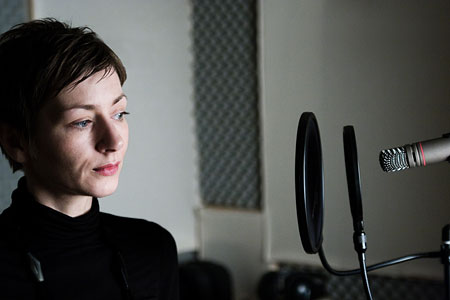
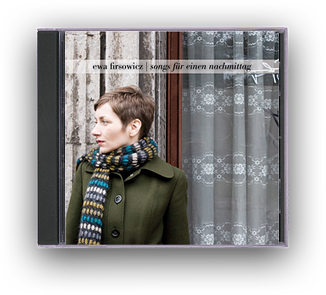
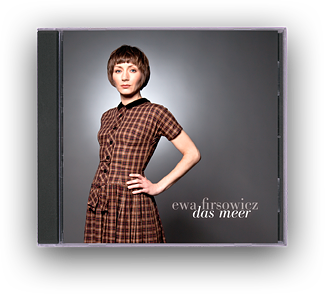








You can listen to some songs of the two albums at Ewa Firsowicz on Myspace.
To invite people to our shows we sent a newsletter by mail, including a video I had cut together using live material from the last show and promotion fotos, along with a track from CD. I was happy I still found two of those teaser video clips on the web. I had forgotten about them for quite a while.
TouchOSC is an app for mobile touchscreen devices that offers onscreen controller elements to interact with your computer via OSC and MIDI. You may build your own controller layouts or choose from a list of existing layouts.
TouchOSC is one of my favourite Apps. It’s cheap and efficient, it’s very well programmed and designed, and it offers a functionality many of us have dreamed of for a long time: To have a touch controller for our music software, and even to be able to very easily build personallized controllers ourselves. And to add one on top: It all works remotely and stably.
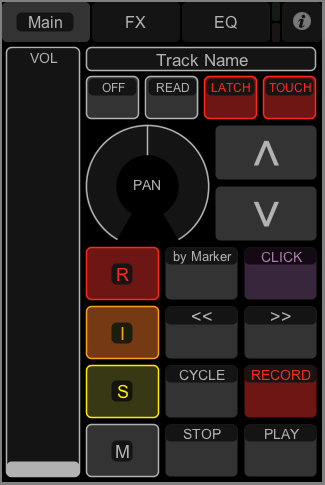
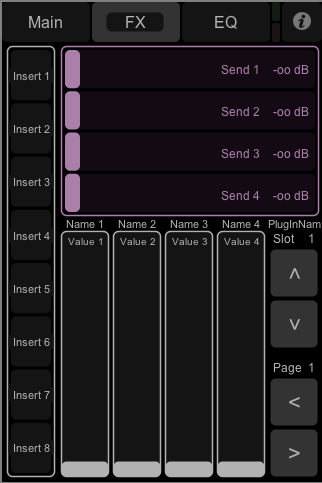
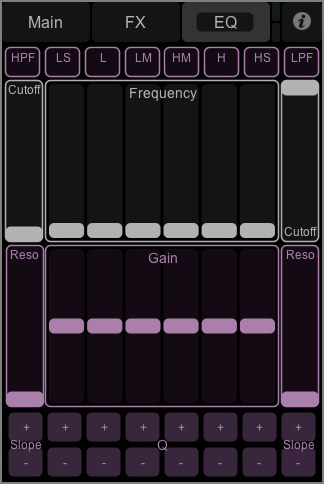
Above: TouchOSC showing my Neutrum Design Mod for LogicTouch
The software package comes in two parts. First of all the app for your mobile device that shows the controller elements on screen and establishes a wireless connection between your mobile device and your computer without the need to install any other sofware on your machine. This works flawlessly out of the box with some included layouts of control surfaces. Secondly an editor application running on your machine that allows you to edit layouts or to create your own from scratch.
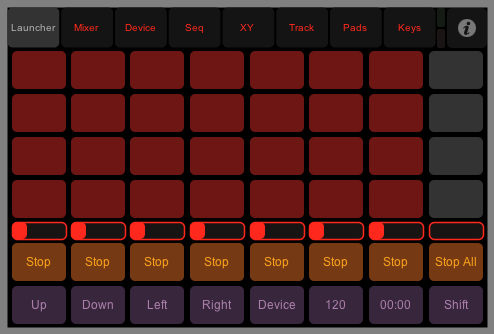
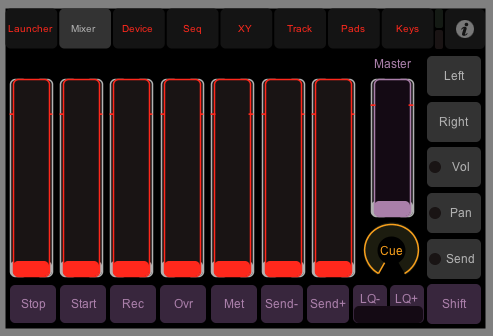
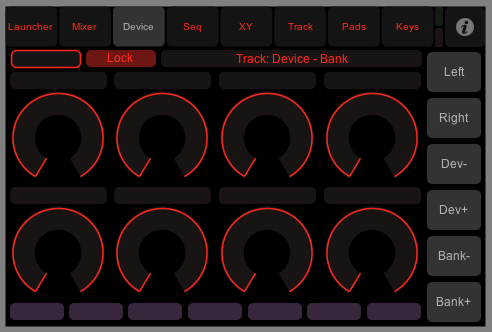

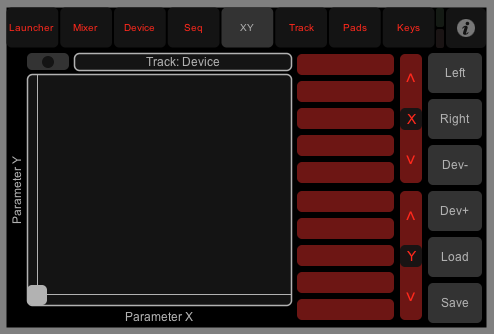
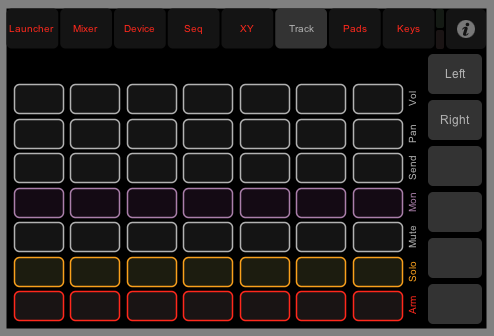
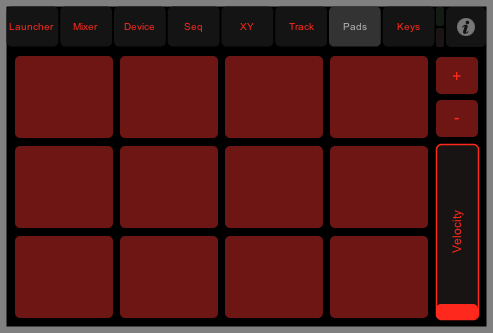
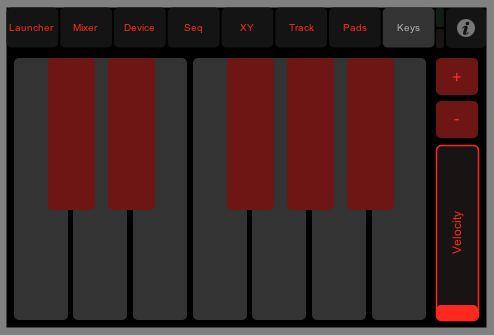
The app for your mobile divice is available for iOS as well as for Android, and the editor application runs on MacOS as well as on Windows or Linux. Both pieces of software run very stably and I couldn’t discover any bugs so far. They are programmed to contain a stable basic functionality without many extras, yet offering a wide range of possibilities including all you usually need without getting confusing.
As the name suggests, TouchOSC uses the modern OSC protocol to communicate with your audio or video software. It can communicate directly with software having the OSC protocol implemented. But as the older MIDI protocol is more widely used it also may send MIDI messages over OSC, which makes your TouchOSC control surfaces appear as a normal MIDI device on your computer.
In case you are interested have a look at the TouchOSC website for more details, pictures, explanations and a clear and very straight forward documentation. As I like this little piece of software so much, I have made a bunch of design modifications to the standard layouts, as well as some basics layouts for my projects, which you might try to get started.
A view back into my past. For twelve intense years I have been touring Europe with the hungarian speed folk band Transsylvanians.
I was curious about what a „Wiki“ might be, and I was surprised to learn and find much more than I had expected. Say hello to TiddlyWiki, your free personal advanced notepad!
A Wiki in general is a system to store and retrieve information, especially when working together in groups. Therefore Wikis are web based and they do not only show their contents but also allow you to edit them. If you think about Wikipedia for a moment, the special thing about it is the fact that you may not only read an article, but also may write one yourself, which makes this collection of information so big and still growing.
Tiddly Wiki is a small Wiki designed for personal use. It runs in your browser and stores information in one single file on your computer. Now the cool thing about Wikis is that they store information in a non-linear way, Which means that you don‘t have one page after another, but you write an entry and may hide it and forget about, but can easily retrieve it by searching for keywords or tags you have given it or looking in a timeline, where every entry is stored in chronological order.
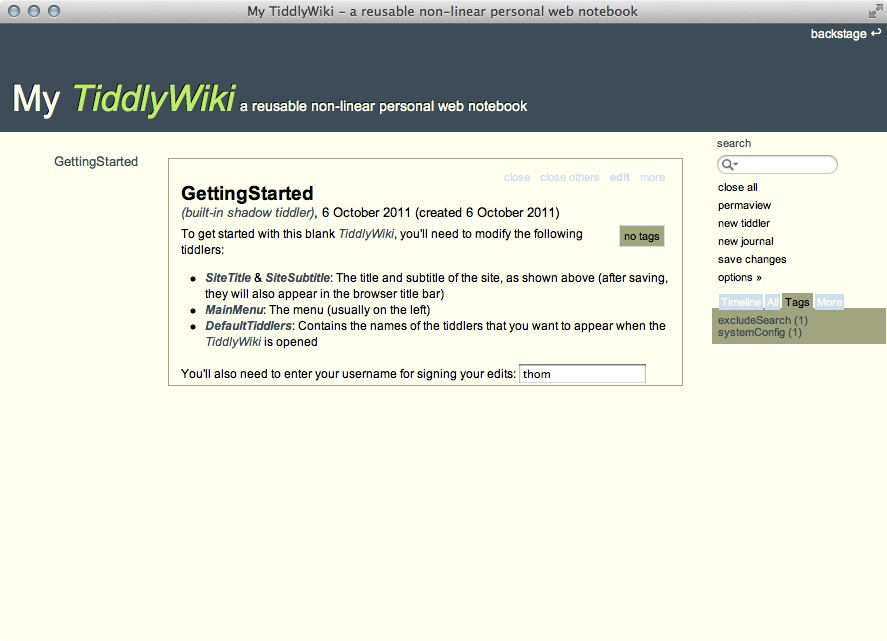
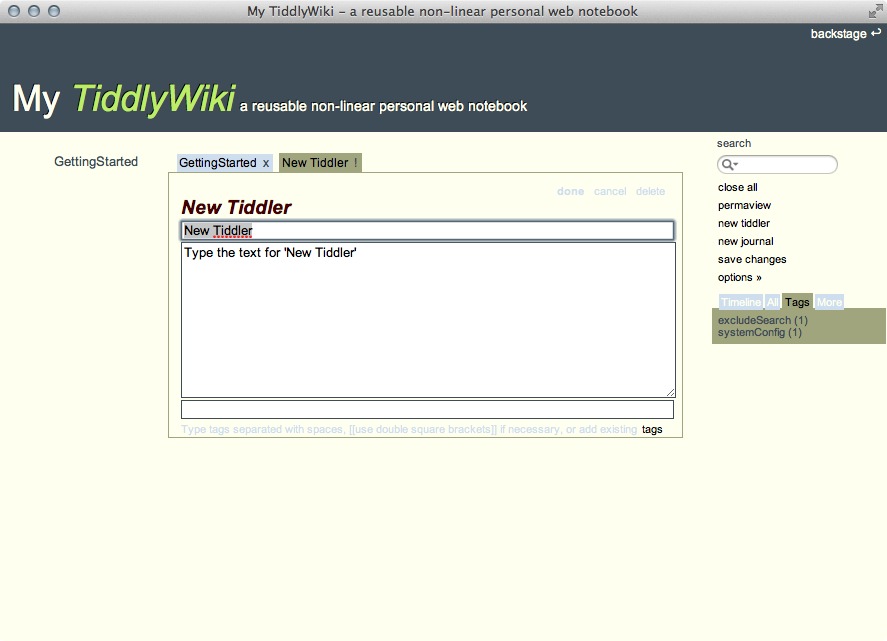

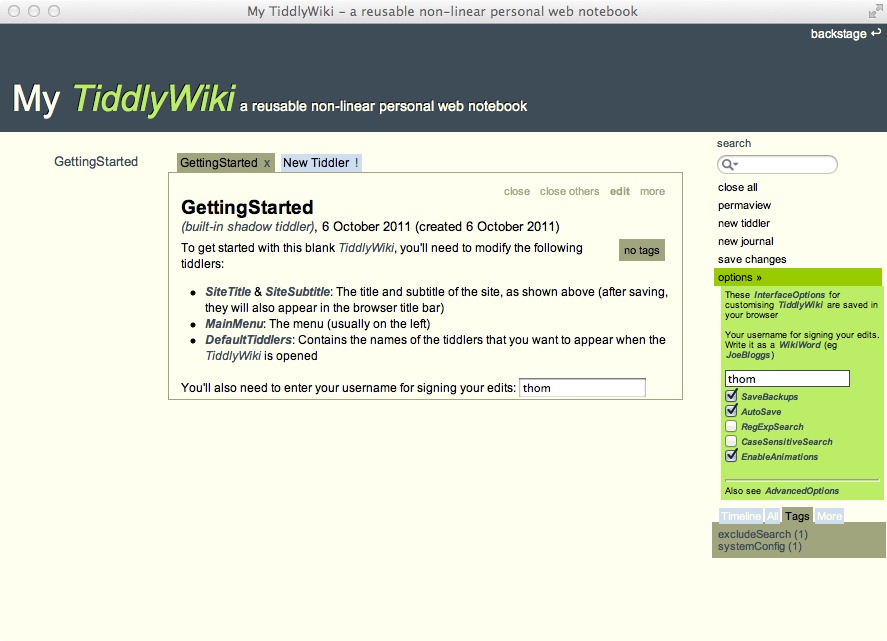
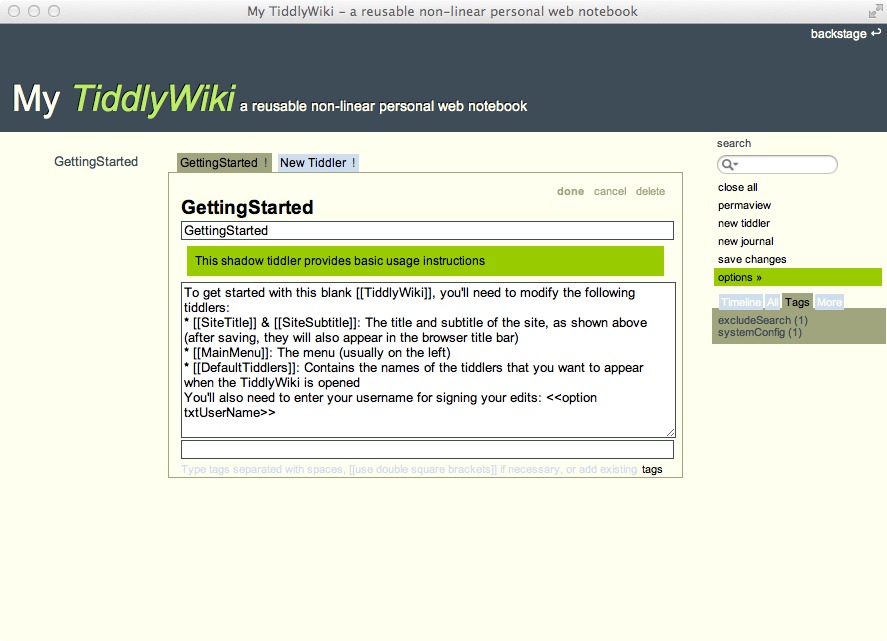
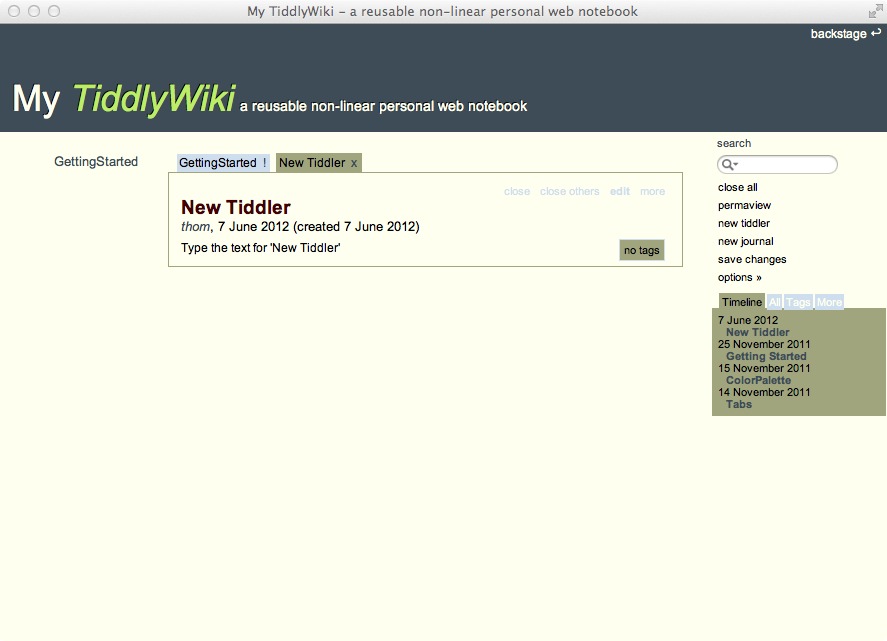
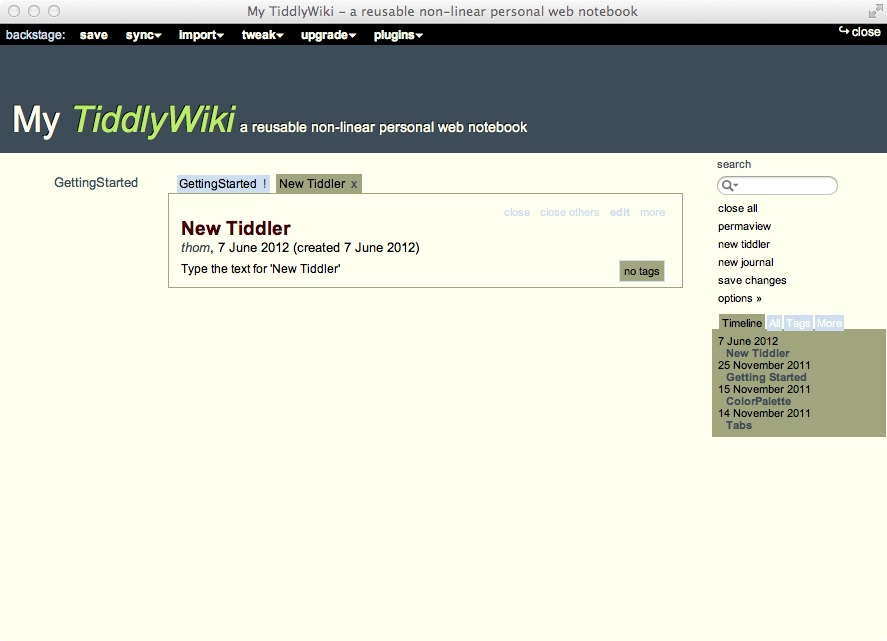
There are many ways to customise Tiddly Wiki, as it is developed by a large community adding content and plugins to expand it‘s functionality. Just as a Wiki‘s content may be read and edited by everyone, the Wiki itself may be used and extended by everyone. This is perfect for me! As you might have noticed I like to edit the software I use to fit my personal expectations and needs, so of course I made some little tweaks, and of course I offer my personal edition for you to download.
So here we go, just download „My Tiddly Wiki“ and try it! A short introduction to basic functions is included. It‘s more or less original version of Tiddly Wiki with just a few tweaks in colour and one plugin which shows your entries in tabs (which is what I was looking for since a friend asked me for just that functionality which he missed in any other software he knew). If you want to learn more about Tiddly Wiki you might also want to look at Wikipedia or visit the original Tiddly Wiki Website.
Some weeks ago, when I went to my cellar, I found a CD that I had forgotten about for many years: A demo of my former smooth-jazz trio „Qualita Rossa“, and I was surprised how much I liked the sound – much better than I had it in mind.